TCM Look-Ahead - Oct. 30
A weekly feature here on Big Heads that looks forward to the week ahead on the mighty Turner Classic Movies. For your viewing and recording pleasure.
A spirited curation for Spooky Season!
Friday, October 30
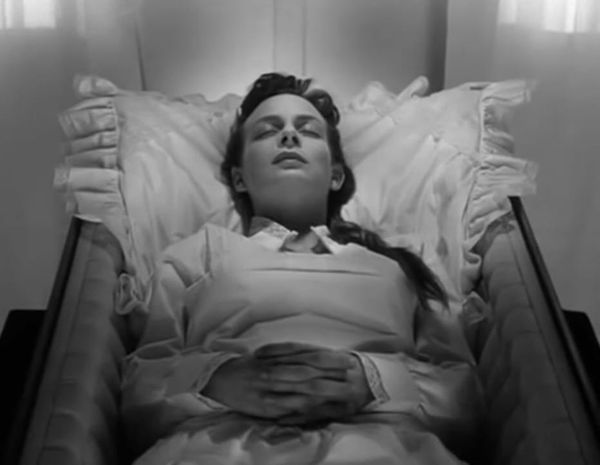
11:00 a.m. PST White Zombie (1932) One of those whats-itz that if you stumble unawares upon it on late night t.v. you might suspect someone snuck a strong hallucinogen into your Spritz. Its director is Victor Halperin, who was more of an actor than director and has no other distinguished works in his filmography, but given the fast-ball throwing stylistics of White Zombie, he joins Charles Laughton (Night of the Hunter) in the annals of actor/directors who should have given us more. Anyway, Bela Lugosi and zombie antics and a brilliant sound design. Not necessarily for the un-inebriated.
The set design is atmospheric, the photography moody, and the music score enervating but innovative. The real frissons come from the sound effects, which deliver some striking moans and screams. – David Cairns
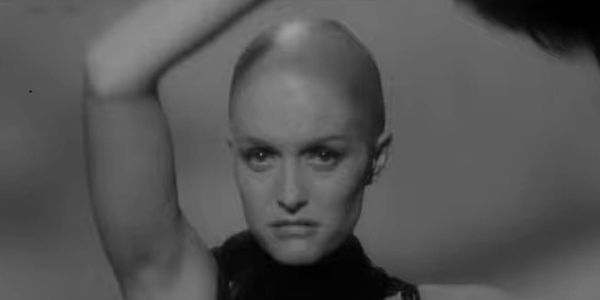
02:45 p.m. PST Eyes Without a Face (1960) Made the same year as Psycho and, arguably, even more disturbing. A guilt-ridden and clearly insane doctor causes an accident which disfigures his daughter. He lures women to his mansion to "borrow" aspects of their visages, and begins a ghastly reconstruction of his daughter's face. In an age where anything goes in onscreen depiction of horror and gore, the central set piece of the facial reconstruction surgery will still leave have you hiding your eyes behind slotted fingers.
A masterpiece of poetic horror and tactful, tactile brutality – J. Hoberman
Saturday, October 31
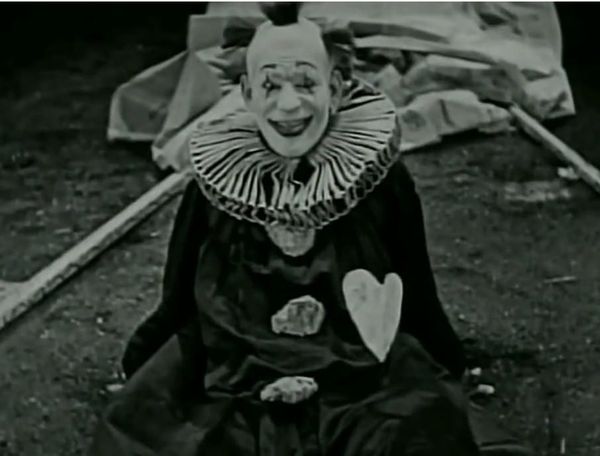
04:00 a.m. PST The Tingler (1959) Known for two remarkable things: 1) William Castle's astonishing hucksterism upon release in 1959, wiring theaters showing The Tingler with electrical shock wires every time the titular creature appears on film and 2) Vincent Price's full-on acid trip. It is really not at all a good film, especially since you are unlikely to wire your couch with shock wires for your viewing. But by gosh, if you are so inclined...
Indeed, I will risk “critical pretentiousness” by going so far as to claim that Castle’s oeuvre mythologizes the cinematic pleasure of the horror film as a socially-ordained ritual for catharsis, especially in the way that he frames the extra-diegetic theater space as a kind of interactive carnival attraction. – Michael A. Arnzen
06:30 p.m. PST Bride of Frankenstein (1935) Another one likely in the "you don't need me to tell you to watch this" category. With Godfather II and Gremlins 2, the greatest sequel of all time. So vastly superior to the original that you will find yourself remarking "wait, that scene is in BRIDE of Frankenstein and not Frankenstein?" The homunculi stored in the bell jars is still one of the most arresting surrealist moments in all of cinema.
Advertised as a chiller, this film turns out to be something else, having a lot of jollification, nice fancy, elegant mounting – there is, in short, beauty as well as the beast. – Otis Ferguson
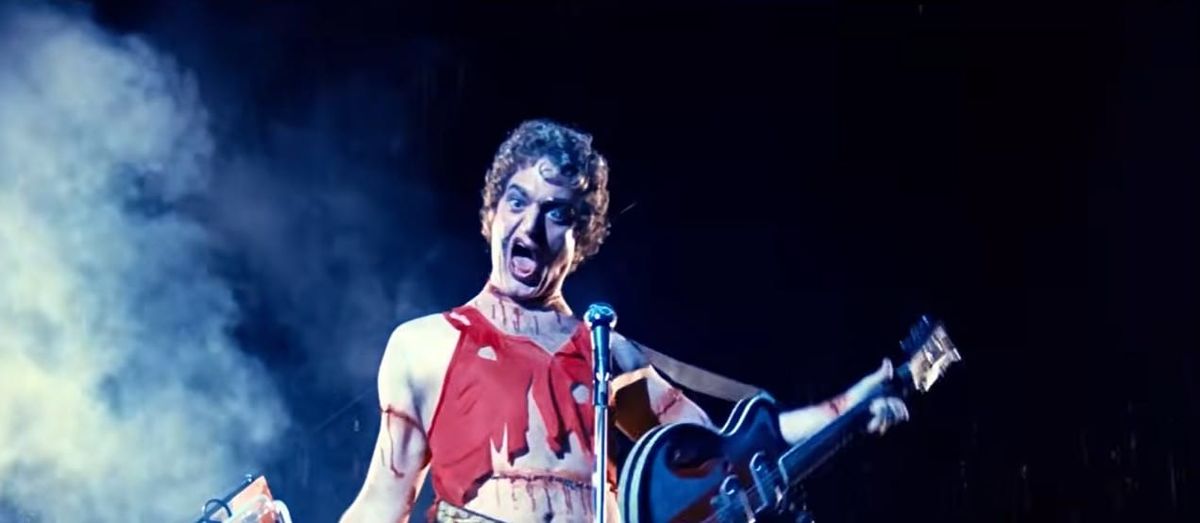
10:15 p.m. PST Phantom of the Paradise (1974) Brian de Palma had Sisters under his belt and was largely seen as an oddball Indy director when he threw everything he had into this amazing hodgepodge of a Rock Opera. It bombed at the time (and was, insanely, unfavorably compared to The Rocky Horror Picture Show). But it has gotten the last laugh. De Palma manages to wedge Faust, Phantom of the Opera, the Beach Boys, a Psycho homage (it's De Palma, so natch), Sha Na Na, Paul Fucking Williams playing a kind of Phil Spector impresario, and so much more into this phantasmagoria. The very definition of understanding the assignment is the recently passed Gerrit Graham's performance as Beef, the David Bowie-inspired glam rocker who meets a spectacularly electric end (pictured). De Palma regular William Finley, alas, is probably the weak point as the Phantom, wronged by Williams and seeking revenge. Elton John would have been more inspired casting, but he was likely too expensive in 1974.
De Palma has mixed too many of his styles in Phantom of the Paradise, but this is still a movie to be seen and heard. – Andrew Sarris
Sunday, November 1
04:15 a.m. PST Night of the Living Dead (1968) The King of them all and probably the only Zombie Movie that ever really needed to be made (and I say this as an admirer of all of Romero's sequels). Every now and then on here I recommend a movie whose reputation precedes the likes of me, but as a gentle nudge to remind what a miracle the artifact is. This is one of them. How did this even happen?
Over its short, furious course, the picture violates so many strong taboos – cannibalism, incest, necrophilia – that it leaves audiences giddy and hysterical. – Dave Kehr
Monday, November 2
03:45 a.m. PST Murmur of the Heart (1971) Louis Malle is an interesting figure. A bit older than the Nouvelle Vague gang (Godard, Truffaut, Rivette, Rohmer, Chabrol) and never employed, like the others, as a film critic, he nevertheless was indisputably part of that particular movement (The Lovers and Elevator, both seminal, landed in the key year of 1958). That he drifted more and more later in his career towards prestige pictures and, ultimately, Hollywood (Pretty Baby, Atlantic City, My Dinner with Andre, Vanya on 42nd street), does not belittle a rather remarkable career as an auteur. Murmur of the Heart is his most personal film, made just prior to the Hollywood pivot. Laurent is a precocious, jazz-loving 14 year old growing up horny in the early 1950s Dijon. When his sexual awakenings lead uncomfortably towards his mother well, then you got yourself one of the most controversial films of the 70s. But it's all handled with light-hearted, non-judgmental care by Malle and his cast.
How [Louis Malle] achieves this effect is beyond me; he takes the most highly charged subject matter you can imagine, and mutes it into simple affection. – Roger Ebert
Tuesday, November 3
A day full of movies starring the divisive but distinctive Burt Lancaster.
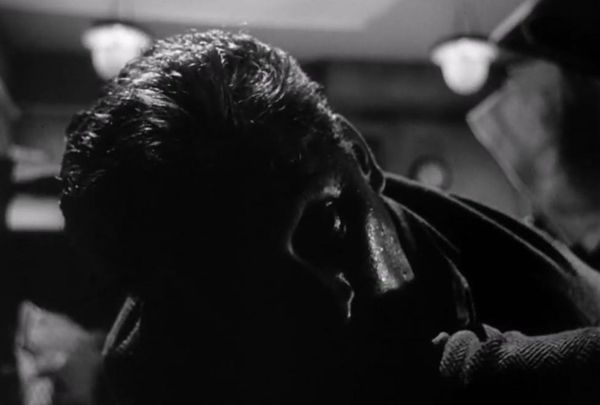
08:00 p.m. PST The Killers (1946) It is true that the film goes a bit south after an absolutely incendiary opening sequence, which depicts the action implied by the title. Lancaster debut introduced a one-of-a-kind physical presence, but as he was anxious to point out to anyone who would listen, with a vulnerability that belies the beefcake facade. Based on a Hemingway short story (remade brilliantly by Don Siegel in 1964, with Lee Marvin and a villainous Ronald Reagan!), Lancaster plays Swede, a palooka boxer who runs afoul of the mob and bags, rather incongruously (I mean, he's handsome and all, but...), the most most beautiful women in the world (Ava Gardner).
Suspense-ridden and exciting down to tiny details in the background – Manny Farber
11:45 p.m. PST Criss Cross (1949) Lancaster and Siodmak again, two peas in a pod. A great Bunker Hill movie (see more about Bunker Hill, the ersatz L.A. neighborhood celebrated in the masterful film essay Los Angeles Plays Itself), it concerns a drifter returning to his hood (Burt L.) trying to make a life for himself against impediments like a not-to-be-trusted ex-wife (the underrated Yvonne De Carlo) and an oily antagonist named Slim (the great Dan Duryea). A Noir Apex.
A hectic fusion of on-location texture and stylish artifice. – Richard Brody
Thursday, November 5
06:30 a.m. PST The Strawberry Blonde (1941) A somewhat softer side of Jimmy Cagney, though he will still cold cock a guy who has it coming. One of the two dozen or so movies Raoul Walks made in a dozen or so years totally within the strictures of the studio system that is at least entertaining and proficient and crackling with life at minimum, and, at his best, sometimes conjured a masterpiece. While Strawberry Blonde is more the former than the latter, it is Old Timey in the best ways. I love it so. "Zactly."
The Strawberry Blonde overwhelms with its aura of 1890s nostalgia, a lot of that old-time feel coming courtesy of snippy bits dialogue delivered by pros like Cagney and Alan Hale, and even more especially its soundtrack filled with turn of the century classics, most notably Charles B. Ward and John F. Palmer’s “The Band Played On” from 1895 (though at the moment I can’t get “Meet Me in St. Louis, Louis” out of my head). – Immortal Ephemera