First Time Watches - August Top 10
Admittedly late, due to travel and procrastination, but some good ones in August (and 2 or 3 masterpieces at that).
A Dandy in Aspic (1968), directed by Anthony Mann
I have been seeking this out in my quest for Anthony Mann completion (it was his last film). Finally found a rather dodgy $9.99 DVD-R copy, and was glad I did. Laurence Harvey, showing what might have been had he followed Sean Connery as Bond, smoothly embodies Eberlin, a Le Carre-esque, embittered spy caught up in twisty cold war machinations. Mia Farrow plays his doe-eyed girl friend, who doesn't have much to do, but man was she cute. 60's through and through, with fantastic costumes by Pierre Cardin. I won't say this leaps out as an Anthony Mann film, in particular, but it is a fine farewell from the great one.
The Dogs of War (1980), directed by John Irvin
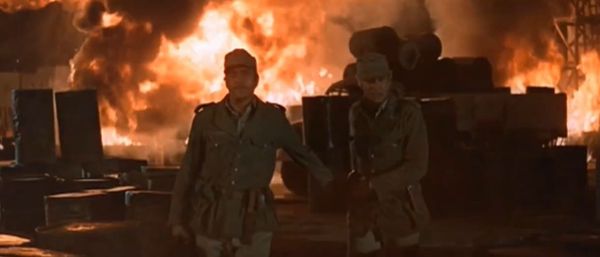
I tuned in with a cringe fearing a xenophobic artifact of the early Reagan presidency, and discovered an absolutely cracking geo-political actioner that doesn't hold back utter contempt for every side. Directed by underrated auteur (there is that phrase again) John Irvin (who made his bones directing the excellent late 70s BBC adaptation of Tinker, Tailor, Soldier, Spy). Christopher Walken has become a walking meme and it is easy to forget what an absolute force he was. This film comes on the heels of Deer Hunter and around the same time as Dead Zone, and his performance could not be more different. Keep in mind around the same time he played the venal tap-dancing lothario in Pennies from Heaven. Incredible range. "You're LATE!"
Graduate First (1978), directed by Maurice Pialat
I decided to dive deeper into Pialat this month thanks to the Criterion Channel. I had become fascinated by the actor Phillipe Marlaut after seeing him in Rohmer's The Aviator's Wife, knowing he would only make two films, the Rohmer and this, before tragically dying in a fire. Marlaut (who was a genuine talent, he might have been the next Depardieu) is one of several young people that get Pialat's mostly sympathetic attention, out of high school and ready for the next phase of adulthood. If you are looking for American Graffiti in the French suburbs, forget about it. While it does not judge the youngsters, it also doesn't pull any punches, and the complete lack of sentimentality is off-putting to some. I found it bracing, truthful and pure Pialat.
The Mouth Agape (1974), directed by Maurice Pialat
A typically no-punches-pulled Pialat on the subject of dying. A mother lies, disease-ridden, in a bedroom above a family-owned five and dime store. As her condition deteriorates, her husband, son and daughter continue to live out their lives with only cursory concern for her. Unblinking, unsentimental and, in the end, deeply moving without pulling on any heartstrings.
La Notte (1961), directed by Michelangelo Antonioni
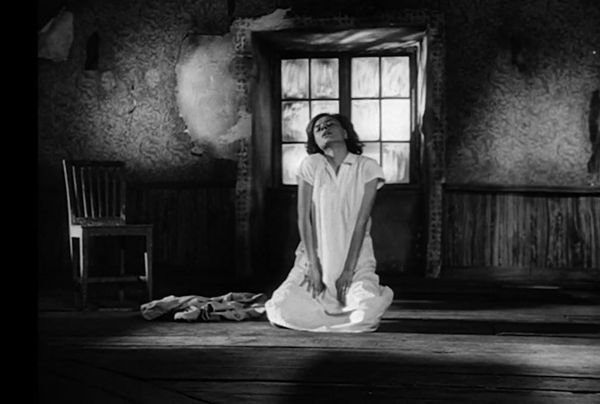
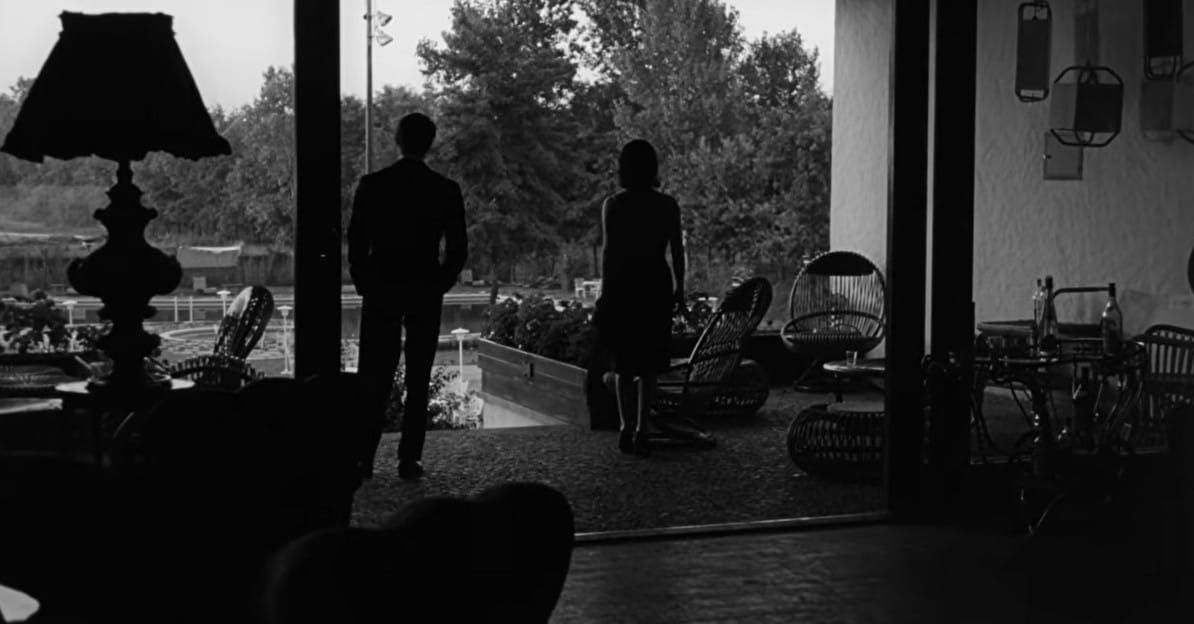
This counts as a first watch because every past effort to watch it led to me falling dead asleep before its conclusion. Yes, Antonioni-ennui (thanks, Andrew Sarris) is real. But watching this with an enraptured sell out crowd at the mighty BFI Southbank theater in London shed a whole new light on this masterpiece. A couple (Marcello Mastroianni and Jeanne Moreau), who barely speak much less evince any affection, wander through Milan in one brilliantly austere, luxuriously composed sequence after another. Antonioni conveys the couple's distance through gesture, eye movement and, of course, architecture (choosing what surely is the most bland of Milan's buildings to form the action around). Mastroianni has a brief interlude with a free-wheeling Monica Vitti, who injects the movie with a brief moment of light. A favorite film of Kubrick and Coppola (Sofia, that is. And you can certainly see the influence).
Nirvanna the Band the Show the Movie (2026), directed by Matt Johnson
I have to admit the antics of Matt Johnson and Jay McCarrol might be better suited to the 20 minute t.v. series format where I first encountered them (and got hooked), but this, a feature-length extension of the series, is full of hilarity and heart. The scene where they two boys sky dive into the Toronto Super Dome only to have the retractable roof close on them (yes, they really did that) is as funny and harrowing as any scene in any movie this year.
The Christophers (2026), directed by Stephen Soderberg
My favorite Soderberg film in quite a while, this is a mostly two-hander about the forming relationship of a cranky art legend (Ian McKellen) and the young woman (force-of-nature Michaela Coel) posing as his assistant who in reality has been hired by the cranky artist's children to forge the unfinished paintings of a collection (the Christophers) they believe to be worth a fortune and their birth right. McKellen could not be better cast and gives arguably the performance of the year so far. Whose art is it, anyway?
The Eel (1997), directed by Shohei Imamura
This late work from the Japanese master Imamura begins with a murder so brutal that one is scarcely able to recover from it. But recover we must, or at least, that is the subject of its remaining 2-plus hours. Whether one can "root" for the paroled murderer on his road to redemption is certainly debatable. What is not is the masterly compositions, the sneaky, mordant humor, and the sympathetic and deeply felt performances of Koji Yakusho and Misa Shimizu.
Celluloid Underground (2023), directed by Ehsan Khoshbakht
A deeply personal documentary by the influential curator Ehsan Khoshbakht (Il Cinema Ritrovato and other festivals) about the history of Iranian cinema, with particular attention paid to a mysterious, obsessive film collector, sort of the Iranian Henri Langlois. There have a been a few docs lately about cinephilia and I am not sure there is one that goes as deeply into the subject as this. And the fact that outside a few art house figures Iranian cinema is a mystery to most westerners, this is not only moving, but enlightening.
I Want Your Sex (2026), directed by Greg Araki
I haven't really connected to the films of Greg Araki, but I enjoyed this candy-colored, animation-infused lark. Olivia Wilde (having quite a year) as an art world superstar who makes Cooper Hoffman her rather unlikely sex slave. Manipulation ensues. Sex-positive for sure (and a big old swipe at Gen Z sexual reticence), but the erotic scenes are played like slapstick. Which was kind of a relief. The commentary on the contemporary art world, while I cannot say I am an expert, seems a bit pat, however. Special shout-out to two supporting performances, Mason Gooding (pretty clearly a star) and Chase Suis Wonders, stealing every scene and owning every line reading.