TCM Look-Ahead - July 24
A weekly feature here on Big Heads that looks forward to the week ahead on the mighty Turner Classic Movies. For your viewing and recording pleasure.
Friday, July 24
10:00 p.m. PDT The Prowler (1951) Joseph Losey before the blacklist sent him to London pretty much permanently. The perpetually put-upon looking Van Heflin stars as the titular creep, a self-hating cop put on a peeping tom case, taking advantage of his position to seduce and abandon poor Evelyn Keys. Written by another soon-to-be-blacklisted figure, Dalton Trumbo. There isn't anything overtly Communist about the proceedings, but it paints an ink-black picture of the Atomic Age in Los Angeles. Taut, nasty, brutish. In other words, big fun!
The Prowler may be the creepiest of classic noirs. – J. Hoberman
Saturday, July 25
06:00 a.m. PDT The Adventures of Robin Hood (1938) Is there anything more pleasing to the eye than Technicolor? It has never been improved upon. This is, of course, the classic of a million youthful fancies that I suspect would be enjoyed by 11-year old boys now as it was then. Give yourself a little break from your timelines and cable news, put your feet up, and enjoy.
In these cynical days when swashbucklers cannot be presented without an ironic subtext, this great 1938 film exists in an eternal summer of bravery and romance. – Roger Ebert
Monday, July 27
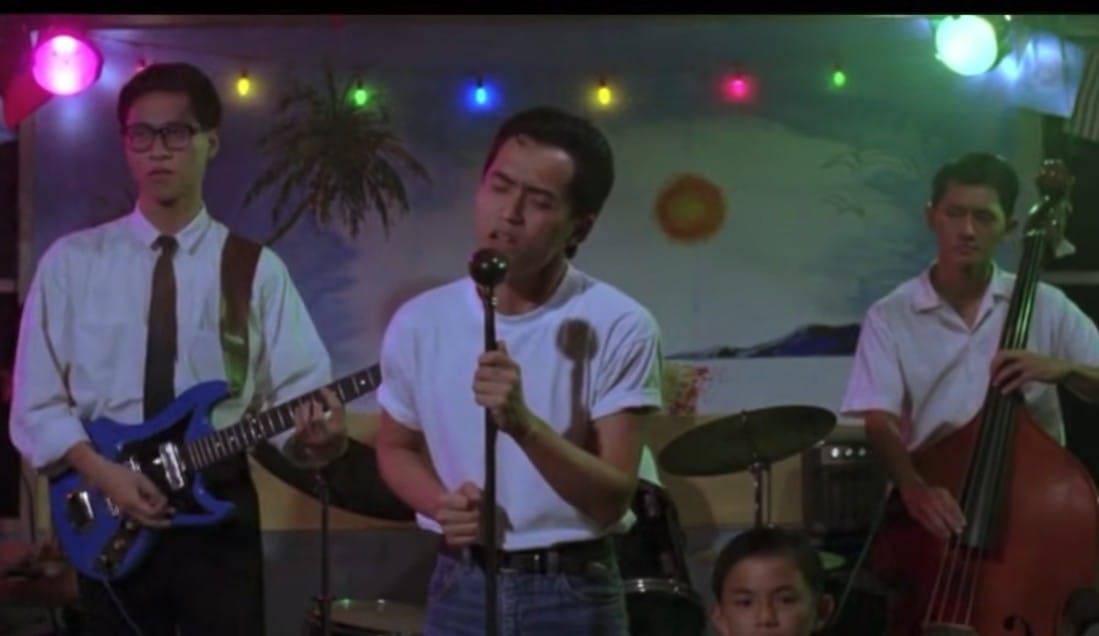
02:00 a.m. PDT A Brighter Summer Day (1991)
Edward Yang's intimate epic about growing up Elvis-besotted in 1960's Taiwan. Deceptively simple, one begins to realize that what is unfolding contains multitudes. Yang has finally started to get his due after years of being the world's least-heralded master. Taken away from us at the entirely unfair age of 59. An unassailable masterpiece.
One of those movies that, by slow accretion of detail and bold dramatic vision, disclose the structure and feeling of an entire world. – A.O. Scott
Tuesday, July 28
02:15 a.m. PDT Smithereens (1982) Susan Seidelman's spiky debut, about a bygone No Wave New York. Wren (Susan Berman) is a self-promoting scenester planting posters of herself with the caption "Who is this girl?" and the like. It is this sort of aimless striving for notoriety which is the film's subject, but it doesn't judge. Seidelman (whose follow up Desperately Seeking Susan possesses more than just a passing resemblance) is more interested in the scene itself, and its inhabitants, which includes an electric screen debut from Richard Hell, who could have been a movie star if he had given a crap. For me, the highlight is the score, by The Feelies at the height of their power. Jonathan Demme would revisit these Feelies songs in Something Wild, as would Olivier Assayas for his film Carlos, but The Feelies objected to their use in a film about a terrorist. Seidelman got there first.
Seidelman's sure feeling for the squalor and glamour of urban decay, and her speedy, stylish editing, combine with a pulsating soundtrack from The Feelies to create a febrile sense of Lower Manhattan street life: fast living on a permanent adrenalin high. – Time Out Magazine
08:00 p.m. PDT Matewan (1987) Matewan strikes me as a great American epic, in a league with Bound for Glory, The Right Stuff or Little Big Man. A dramatization of the Battle of Matewan, when coal miners reluctantly got the Union and had to fight for their lives and livelihoods against "The Company," Sayles offers no easy bromides or solutions. Union, Yes! but what chance does it have against a voracious system bent on capital over everything else. The final shootout, while brilliantly staged and shot (by the great D.P. Haskell Wexler), is one of the least cathartic I can remember. Yes, a few very bad men get what's coming to them, but good men die, too. A wobbly balance exists, but nobody wins. Which come to think of it is a fine summary of the ethos of John Sayles.
Marks a turning point in the auteur's career, a transition between a teller of personal tales and a conveyor of universal ones. – Walter Chaw
A trio of seminal American Indies back to back to back!!!
10:30 p.m. PDT Slacker (1990) Richard Linklater's shaggy, lollygagging portrait of a bunch of Austin youths who simply will not be bothered by life.
The film presents the teeming weirdness of daily life in Austin as a swarm of individual alternatives, each spinning wildly out of control and crashing into one another's active fantasies to unleash vast creative energy. – Richard Brody
Wednesday, July 29
12:15 a.m. PDT Bottle Rocket (1996) A case has been made that the end of the close collaboration with Owen Wilson (as co-writer) led to the Wes Anderson-ization of his subsequent films. While I think the premise that his films lost heart after the collaboration is bunk, there is something more free-wheeling and less self-conscious about the early films. Bottle Rocket, Anderson's first feature, is a delight. Brothers (Luke and Owen Wilson) and deadbeat friends plan a heist. It doesn't go particularly well. The romance at the center, between Luke and Lumi Cavazos, is surely the most convincing depiction of romantic love in the Anderson oeuvre. It's quite lovely. May have to chalk that one up to the Wilsons. James Caan, whose presence helped secure the film's financing, co-stars as a dodgy mentor for the boys.
This deliciously offbeat comedy gets much of its oomph from a loopy screenplay and lead performances that can only be called hilariously bland, or is it blandly hilarious? – David Sterritt
02:00 a.m. PDT Drugstore Cowboy (1989) Gus Van Sant's entree into the Pantheon of Indy superstar auteurs. In Portland, Bob(Matt Dillon) leads a crew (including Kelly Lynch and Heather Graham) robbing drug stores, more interested in the drugs than the cash. Van Sant really gets Portland, it is his home town. It took real stones for Dillon to take on the role of an impotent junkie loser while still riding the wave of heartthrob idolatry. It is far and away his best performance. Based on the book by James Fogle. "You owe yourself an indulgence..." William S. Burroughs as Tom the Priest.
All the actors are used expertly, but it's Burroughs, cropping up near the end, who articulates the film's sociopolitical moral in a contemporary context. – Jonathan Rosenbaum
Thursday, July 30
11:30 p.m. PDT Wind Across the Everglades (1958) Frequent Big Heads contributor Nicolas Ray and one of his strangest films. Set in the swamps of Florida, it concerns an Audubon game warden (a young Christopher Plummer, with American accent) who intends to enforce anti-poaching laws, specifically how they relate to flamingos. He runs afoul of Cottonmouth (an astounding, Falstaffian Burl Ives), leader of a fierce gang of swamp cabbage munching flamingo poachers. Weirder than it sounds, believe it or not.
...a movie that suggests Miami was mad from the moment that Henry Flagler brought the railroad to the tip of the state, featuring a Henry the VIIIth-esque Burl Ives ruling over a raggedy enclave of Everglades-ensconced swamp rat poachers including circus folk, prizefighters, jockeys, and Peter Falk. – Nick Pinkerton
Friday, July 31
06:00 a.m. PDT Safe in Hell (1931) Wild Bill Wellman's wonderfully titled pre-code potboiler, about a prostitute on the run from the law after accidentally killing her would-be rapist. She finds herself amongst a mostly merry band of miscreants on an unnamed tropical island (Hell, to you), many of them harboring un-wholesome thoughts about our heroine. Think Friedkin's Sorcerer, only female-forward and a taut 73 minutes! One of my favorite discoveries of the last couple of year. Smash that record button.
The film’s title is no exaggeration; imagine 'Casablanca' as a lice-infested backwater run by mercenary opportunists and filled with the sleaziest criminals to escape a manhunt. – Sean Axmaker