TCM Look-Ahead - Sept. 11
A weekly feature here on Big Heads that looks forward to the week ahead on the mighty Turner Classic Movies. For your viewing and recording pleasure.
The column returns and so does TCM, with a marvelous week of programming after stumbling through Summer Under the Stars.
Friday, September 11
05:30 p.m. PDT Bells are Ringing (1960) Sadly, the last film of the great Judy Holiday, reprising her Broadway role in a wide-screen musical directed to the hilt by Vincente Minnelli. Holiday plays a telephone answering service operator (remember those?) whose nosiness gets her into mischief but also garners the attention of an atypically uncool Dean Martin as a blocked writer searching for a muse.
Vincente Minnelli makes use of the wide screen with graceful, fluid movement, and he helps Martin anchor his usual breeziness with just the right amount of anxiety. – Michael Sragow
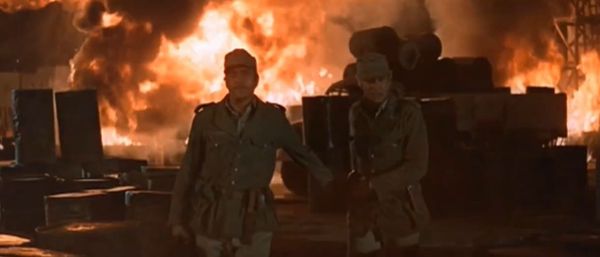
TCM shifts their attention later on Friday to the greatest of all film composers, Ennio Morricone. It begins with a documentary I have not seen, Ennio (2022) at 8:00 p.m. PDT, but you know I will be tuning in. The Morricone tribute spills over to...
Saturday, September 12
Going to avoid the spaghetti westerns in the Morricone tribute (either too obvious or a bit overrated like The Great Silence), and concentrate on one of his greatest scores for one of the greatest films of the 60s.
05:15 a.m. PDT The Battle of Algiers (1966) Hommaged in One Battle After Another and endlessly influential, this docudrama by Gillo Ponteverco has lost none of its bite. A battle of wills and wits between a commander from the oppressor (France) and the Algerian terrorist who stops at nothing to win. Politically charged in every frame and utterly unsettling. It seemed like Ponteverco had discovered something truly new and had a bright future, but other than another politics-centric film Burn, with Marlon Brando, which crashed and burned at the box office, his career never took off.
Like all masterpieces, it speaks to later ages as powerfully and intelligently as to its own. – David Sterritt
Sunday, September 13
04:15 p.m. PDT Make Way for Tomorrow (1937) An old couple (Beulah Bondi and Victor Moore) are forced, through circumstance, economics and greedy, useless offspring, to separate. Leo McCarey, who was not immune to sentimentality (see Bells of St. Mary's or Going my Way) plays what may have been high melodrama straight, almost comically, until the final act, which is as shattering as anything I have ever experienced in the cinema. The greatest American film? You could make the case.
It's easy to imagine it being sentimentalized by a studio executive, being made more upbeat for the audience. That's not McCarey. – Roger Ebert
08:00 p.m. PDT Withnail and I (1987) What is so irresistible about these two losers? We just can't get enough of them even though they are truly awful, awful louts. Could be there is a certain relatability to a certain age and gender group about being lost in your twenties, using copious amounts of alcohol and drugs and rickety friendship to cling the the threads of a threadbare existence. Could be.
Though this directorial debut of screenwriter Bruce Robinson reads more like a well-wrought short story than a feature film, his characters are finely drawn and their dialogue wickedly funny. – Carrie Rickey
Monday, September 14
Ah, yes, on this day a typically bleak Ingmar Bergman double bill followed by a series of feather-light college knockabout comedies. Well done, TCM, well done.
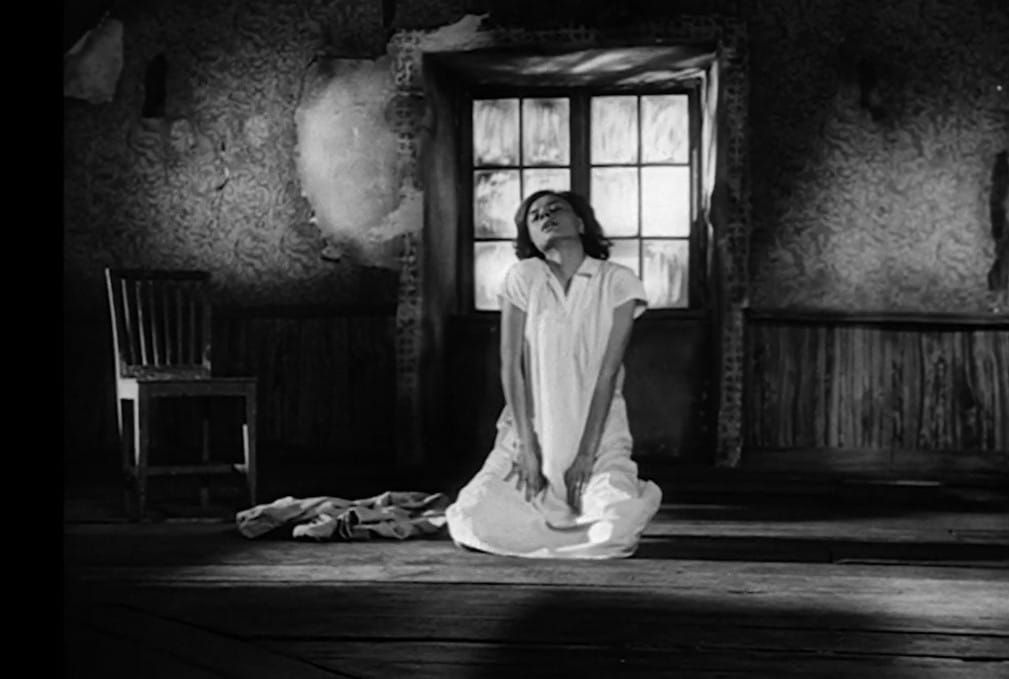
02:00 a.m. PDT Through a Glass Darkly (1961) By 1961 Bergman had become a brand name, and this bleak character study was an Oscar winner for Best Foreign Film (following 1960s win for Virgin Spring). A young woman (Bergman regular Harriet Andersson) seems to be losing her mind on Bergman's beloved Faro Island. The unsung star is, as usual, cinematographer Sven Nykvist.
It is almost superfluous to note that the film is beautifully made: visually exquisite, ingeniously knit. – Stanley Kauffman
Also don't miss the terrifying Hour of the Wolf at 03:45 a.m. PDT.
Tuesday, September 15
09:30 p.m. PDT The Crimson Pirate (1952) Director Robert Siodmak and actor Burt Lancaster collaborated a lot, and after a series of jet-black noirs they embarked upon Crimson Pirate and just said "Fuck it, let's have a ball." You will too. Knowingly self-parodying yet utterly irresistible in its technicolor, stunts, swordplay, cannon balls and sizzling sexual chemistry between Burt and Eva Bartok. More pirate movies, please!
Slam-bang, action-filled Technicolored lampoon – A.H. Weiler
Wednesday, September 16
12:45 p.m. PDT The Bad and the Beautiful (1952) More Minelli. This time eschewing the technicolor and songs and dance for a inky poison pen letter to Hollywood. Kirk Douglas is the no-gudnik egoist producer whom no one can seem to resist. The insider stuff gets a bit on the nose, but as a portrait of the sado-masochistic relationships that permeate the business of show (specifically, that which resides in Tinseltown), it has never been topped.
Under Minnelli's direction it becomes a fascinating study of a man destroyed by the 50s success ethic, left broke, alone, and slightly insane in the end. – Dave Kehr
Thursday, September 17
On Thursday, TCM pays tribute to the great, and underrated, Hollywood pro, Richard Fleischer (some are quite obscure, so Fleischer-completists smash that record button).
04:30 p.m. PDT The Last Run (1971) Roger Ebert once incorrectly referred to Fleischer as The King of Mediocrities. How could one watch The Narrow Margin, Barabbas, The Vikings, Compulsion, 10 Rillington Place and the Boston Strangler, among many others, and come to this conclusion? Fleischer took over for John Huston at the helm of this Hemmingway-esque actioner with George C. Scott doing the one last job thing. Scott's inimitable gravitas as a man trying to prove to himself he is a man and Fleischer's typically precise and often inspired direction makes it a cut above. Sweet car, too.
In Fleischer’s hands, what on paper plays as a boring set of clichés is as punchy as the aftermarket supercharger that Scott’s character installs into his (equally aging but steadfast) 1957 BMW 503. – Screen Slate
Other Fleischers included and worth seeing: Trapped, Armored Car Robbery, The Narrow Margin (previously recommended) and the still-pungent Soylent Green.
Friday, September 18
04:30 a.m. PDT Jeanne Dielman, 23 Commerce Quay, 1080 Brussels (1975) A firestorm of sorts was set off when Chantal Akerman's Jeanne Dielman was named the greatest film of all time in the influential Sight and Sound poll of 2012. Oh, how the Film Bros kvetched. How could this excruciatingly dull feminist tract be the best when The Godfather exists? And, admittedly, a certain amount of patience and good faith must be exhibited in order for the extraordinary payoff of Akerman's masterpiece. The title character (the great Delphine Seyrig) goes about the business of the every day. From the first frame to the last, we know something isn't quite right. We sit, unsettled, on the edge of our seat, to await what is next.
At once spectacle and anti-spectacle, Jeanne Dielman not only criticizes the dominant mode of representing women but challenges the dominant mode of representation itself. – J. Hoberman